ServicesSiding
Siding Repair and Replacement in Crescent Springs
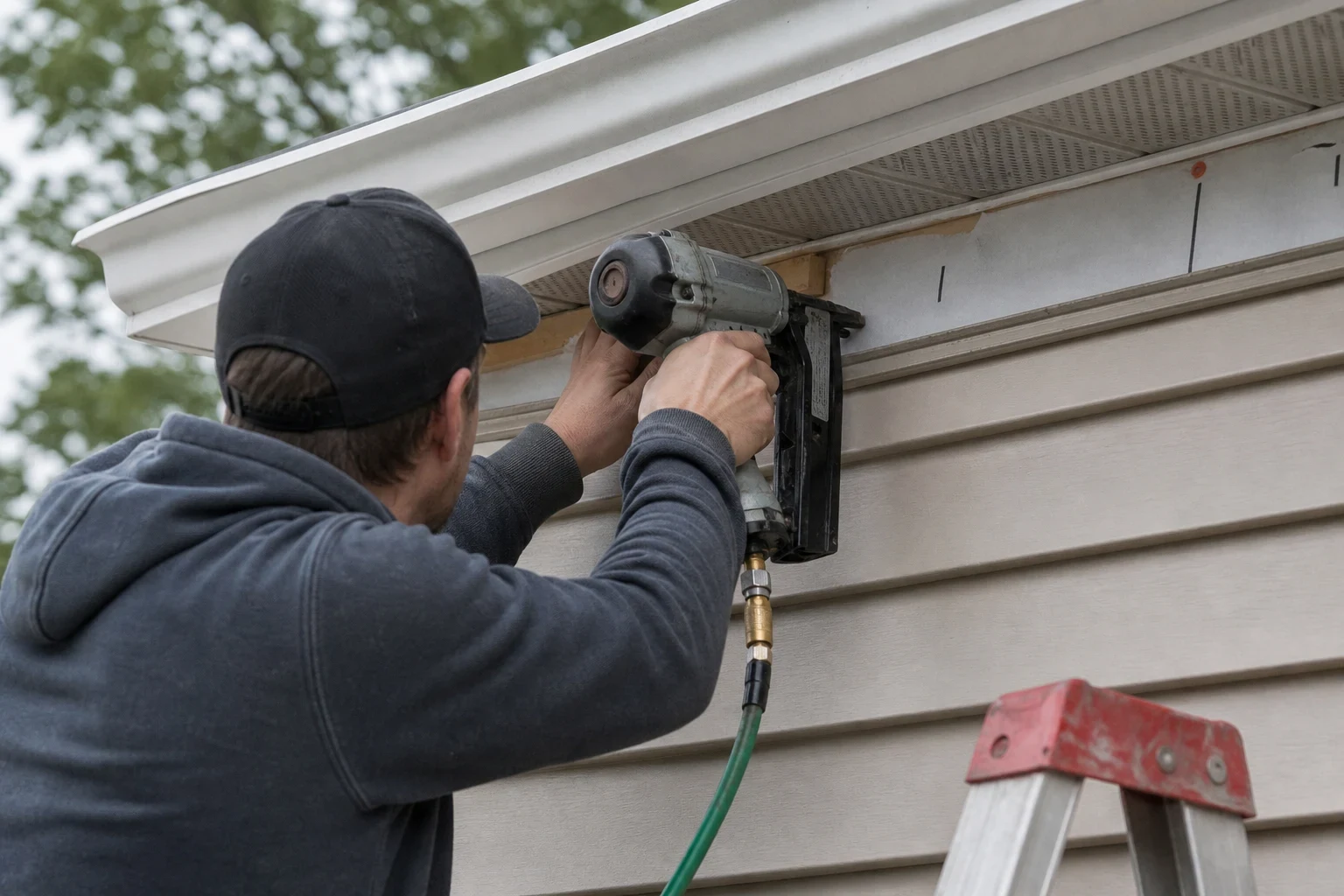
We fix loose, cracked and storm-hit siding, and we replace whole walls when patching won't hold. We check the wrap and flashing behind it, not just the face. After the job, we come back to see how it's holding up and show you how to care for it.
What siding work covers
Siding is the skin of your home. Its job is to shed rain and keep wind out of the walls. When a panel cracks or pulls loose, water gets behind it and soaks the sheathing. You often don't see that damage until the wall feels soft or paint starts peeling inside.
Sometimes a few panels and a bit of trim are all it takes. Other times the siding is brittle, faded past matching, or the wall behind it is wet. We tell you which one you have and show you photos of why.
Our winters here swing above and below freezing, and vinyl gets stiff and easy to crack in the cold. That's why we nail it so it can move, and why we check back once it has been through a season.
What we do on a siding job
- Panel repair and replacement
- We pull damaged vinyl or fiber cement pieces and fit new ones in the same profile. If an exact color match isn't made anymore, we tell you up front and talk through options, like moving matching panels from a less visible wall.
- House wrap and sheathing check
- With siding off, we look at the wrap and the boards under it. Soft or rotted sheathing gets replaced before anything goes back on.
- Flashing at windows, doors and roof lines
- Most leaks behind siding start where a wall meets a window or a roof. We fix or add flashing there, including kickout flashing where a roof edge ends against a wall.
- Trim, soffit and fascia
- We repair or wrap the trim, soffit and fascia that tie the siding to the roof edge. This also gives your gutters something solid to hang on.
- A covered crew on your walls
- We're licensed and insured. If you want to see the paperwork, ask on the call and we'll bring copies to the inspection.
Signs your siding needs attention
Panels that rattle or hang loose
Wind lifts siding that was nailed too tight or too loose. Once one piece goes, the next storm takes more.
Cracks, holes or chips
Hail and cold-weather bumps crack vinyl. Even a small hole lets water run down inside the wall.
Warping or bulging
Wavy panels usually mean they were nailed tight and can't move with the heat. It can also mean the wall behind is swelling from moisture.
Peeling paint or stains inside
Water stains on an inside wall near a window often trace back to missing flashing outside.
Heavy fading on one side
The sunny side of your home fades first. Bad fading can mean the panels are getting brittle, too.
How a siding job runs
- 1
Free inspection
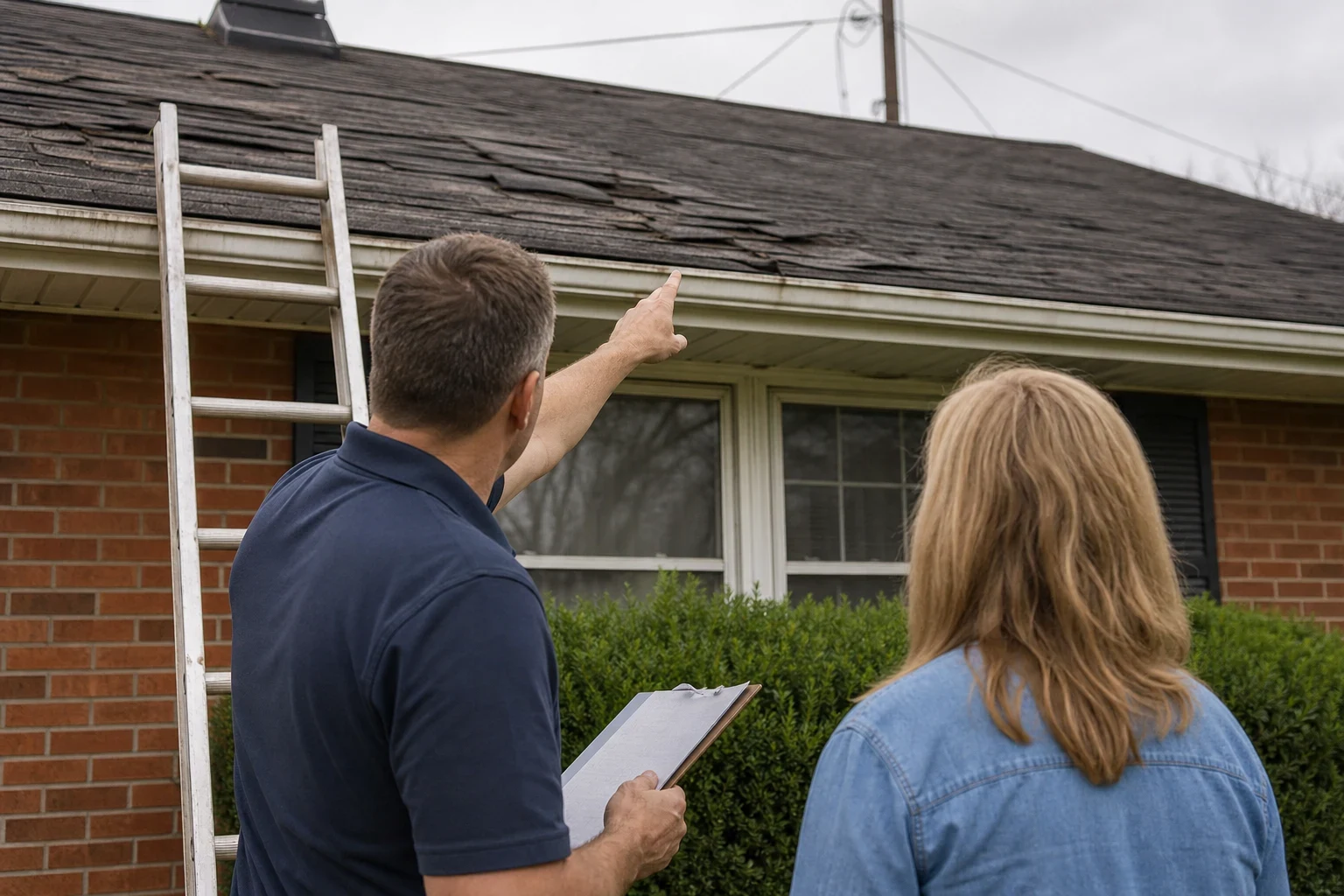
We walk every wall, press on soft spots and look behind a loose panel or two. You get photos of what we found.
- 2
Written estimate
You get a line-by-line estimate for repair or replacement. If you can't decide, we explain what each choice buys you, and we check whether your city needs a permit.
- 3
Work day
We cover plants and lay tarps along the walls. Old siding comes off, the wall gets fixed and wrapped, and new siding goes on with room to expand. At the end of the day we comb the beds, lawn and driveway for stray nails and scraps.
- 4
Walk-through and care notes
We walk the finished walls with you. You get notes on how to wash the siding, what to watch near the dryer vent and grill, and how to keep sprinklers off it.
- 5
We check back
After the first stretch of hard weather, we call and come out if you'd like to look over the walls. Anything that shifted from our install gets fixed under our 10-year labor warranty.
What moves the price of siding work
Every wall is different, so we don't price siding off a chart. We measure, look behind the panels, and write down each part of the job. You'll know what's in the price before we start.
- Wall area and height
- More square feet means more material and time. Two-story walls need more staging and ladders than a ranch.
- Material you choose
- Vinyl, insulated vinyl and fiber cement all cost different amounts and install differently.
- What's under the old siding
- Rotted sheathing, missing wrap or an older layer that has to come off all add work. We price these once we've seen them.
- Trim and flashing
- Windows, doors and roof lines need flashing and trim. Homes with lots of corners and openings take longer.
Siding questions we hear
Something not covered here? (859) 251-3835
Can you replace just a few panels?
Yes, if the rest of the siding is in good shape. The catch is color. Older panels fade, so a new piece can look off. We'll show you a sample against your wall before we order.
Can new siding go over the old siding?
We usually take the old layer off. That's the only way to see whether the wall underneath is wet or rotted. Covering a problem just hides it for a few years.
Is storm-damaged siding covered by insurance?
It often is when wind or hail did the damage. We take photos and write up what we see so you have it for your adjuster. Our Storm Damage Repair page has more on how that goes.
What warranty do you give on siding?
Our installs come with a 10-year labor warranty. If something we put up comes loose because of how it was installed, we come back and fix it.
How do I take care of new siding?
Rinse it once or twice a year with a garden hose and a soft brush. Skip the pressure washer, since it can force water behind the panels. Keep grills and mulch a few feet off the wall.
How long does a siding job take?
Repairs are often done in a day. A full replacement on an average house takes a few days, longer if we find rot. We'll give you the plan before we start.
Get your siding looked at
We'll come out, check every wall and tell you plainly what it needs. Ask about our Limited Time — $50 Off Your First Service Call.