ServicesGutters
Gutters in Crescent Springs, Installed to Carry Water Away
We hang new gutters and fix old ones so rainwater leaves your roof and lands well clear of the foundation. Each run is sized to the roof above it and pitched by measurement, not by eye. Once the job is done, we check back and show you how to keep things flowing.
What gutter work fixes
Gutters have one job. They catch the water coming off the roof and drop it where it can't hurt your home. When they sag, clog or leak at the seams, that water lands on fascia boards, siding, window wells and the soil against your foundation. Rot, peeling paint and a damp basement often trace back here.
We put up new one-piece gutters, replace old sectional runs and repair systems that are mostly sound. That can mean resealing corners, rehanging a sagging run or adding a downspout. If a repair will hold, we tell you so. Freeze and thaw all winter is hard on loose hangers and cracked seams, so we look at how the system is fastened, not just whether it drips today.
When the work is done, we don't just drive off. We check back after a good rain and walk you through the simple upkeep that keeps your gutters working.

What our gutter work includes
- 01
Sizing for your roof
We measure roof area and pitch to choose between 5-inch and 6-inch gutters and to decide how many downspouts you need. Big or steep roof sections often need the larger size so water doesn't shoot past the gutter in a hard storm.
- 02
One-piece runs formed on site
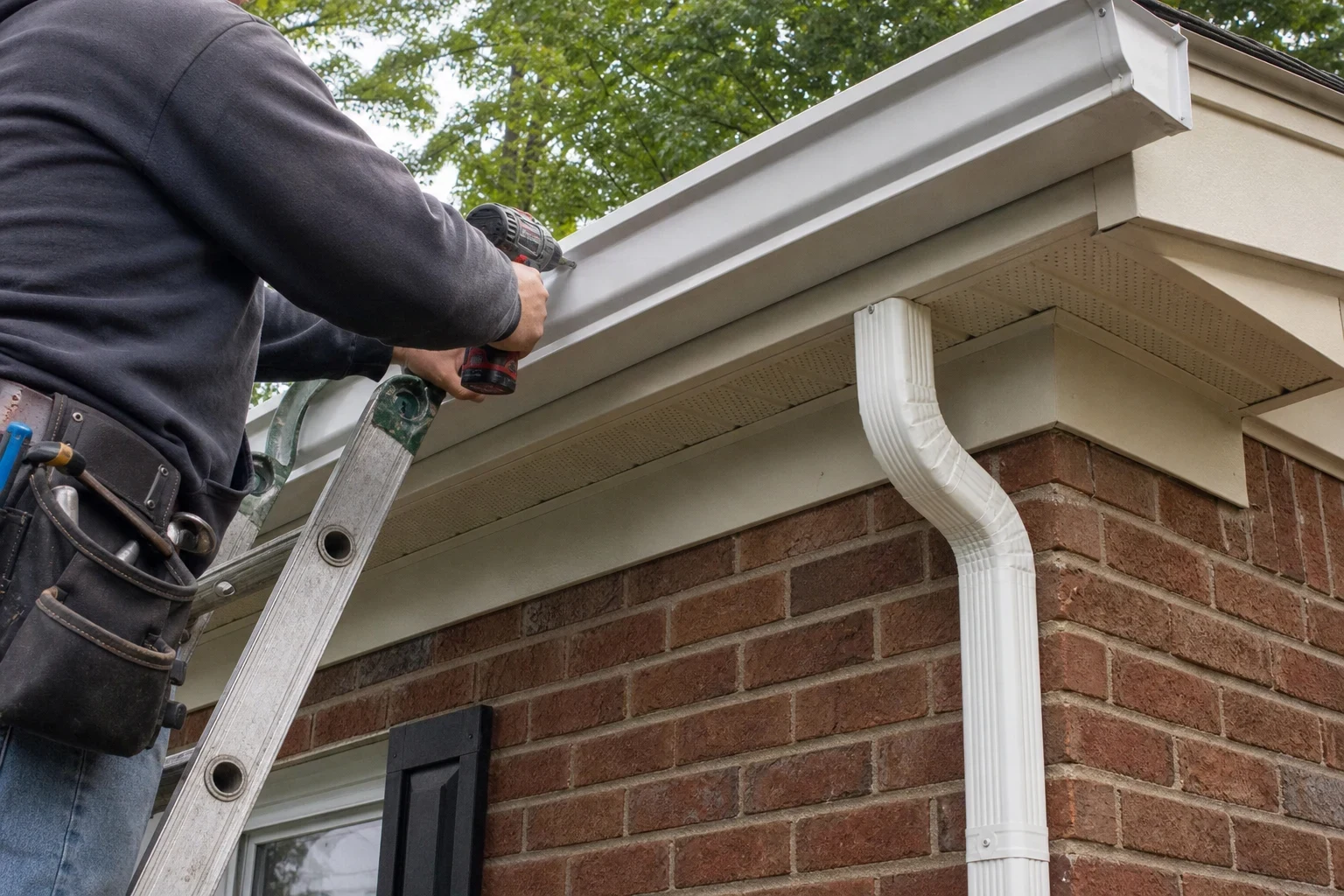
We form continuous aluminum gutters from coil right at your home, cut to the length of each wall. Fewer joints means fewer places to leak. Corners and end caps are sealed by hand.
- 03
Correct pitch and hidden hangers
We snap a line so each run falls toward its downspout, about a quarter inch every ten feet. Hidden hangers screw into the fascia at close spacing so the gutter holds under wet leaves and winter ice.
- 04
Downspouts and extensions
We place downspouts where the water has somewhere useful to go. Extensions or splash blocks carry it away from the foundation.
- 05
Fascia check
If the board behind the old gutter is soft, we show you before the new gutter goes up. Hanging a new gutter on rotten wood just moves the problem.
- 06
Cleanup and a care walk-through
We haul off old gutters, scrap and screws, and run a magnet over the yard. Then we show you what to clean and when. Our crew is licensed and insured for this work.
Questions about Gutters?
Call(859) 251-3835Signs your gutters need work
Water spilling over the edge
Rain should run along the trough to the downspout. If it sheets over the outer lip in a storm, you likely have a clog, a gutter too small for the roof above it, or a run sloped the wrong way. We figure out which before we fix anything.
A run that droops or leans
Look along the roofline. A section that bows low between hangers, or tips out away from the fascia board, has fasteners that have let go. Standing water adds weight, and the gap gets wider with every storm.
Streaks and flaking paint
Dark lines running down the siding, or paint lifting off the trim boards, tell you water is slipping behind the gutter instead of into it.
Soggy ground by the foundation
Mulch washed away, a groove dug out below a downspout, or a basement wall that turns damp after rain all mean water is dropping too close to your home.
Heavy ice at the eaves
A few icicles in January are normal. A thick ridge of ice along the edge every winter often means the gutter is full of water that freezes in place. The roof edge may need attention too, which we look at during a roof inspection.
Drips at joints, rust spots
Water dripping from corners and seams during rain, or orange rust spots on old steel gutters, usually means the sealant has failed or the metal is wearing through.
How a gutter job goes
- 1
Free look and estimate
We walk around your home and look at the roof edge, fascia, downspouts and where the water ends up. Your estimate comes in writing, with each piece of the job on its own line.
- 2
Prep on the day
Ladders go up with standoffs so they don't dent gutters or rest on siding. The old gutters come down and we check the fascia before anything new goes on.
- 3
Install and test
We hang the new runs and set the downspouts. Then we run a hose through every section and watch it drain before we pack up.
- 4
Checking back once it rains
Once the first real rain has come through, we follow up with you about how the system handled it. If an outlet backs up or a joint drips, we come adjust it.
What moves the price of gutters
We price gutters once we've measured your home, not from a guess. Two houses the same size can come out different. These are the things that make the difference.
- Length and corners
- Total linear feet sets the base. Every inside and outside corner adds material and sealing time.
- Gutter size
- Six-inch gutters and larger downspouts cost more than five-inch, but some roofs need them to keep up with heavy rain.
- Height and access
- A two-story wall, a steep slope or tight landscaping takes more setup and care with ladders.
- Fascia condition
- Soft or rotted boards must come off and be swapped for solid wood so the new hangers have something to grip. The full extent only shows once the old gutter is down, and we show you what we find before going further.
- Guards and extras
- Gutter guards, extra downspouts and underground extensions are add-ons. We list each one separately so you can choose.
What people ask us about gutters
My gutters leak in a couple of spots. Is a fix enough, or do I need new ones?
A few leaky seams on gutters that still hang straight can usually be resealed. Old sectional gutters that sag in several places or have rust coming through tend to cost you more in patches than a new set would. We look at the whole run and give you the answer we'd want for our own house.
Are gutter guards worth it?
It depends on what's growing near your roof. Tall trees right over the eaves drop a lot into the gutters, and guards can save you cleanings. With an open yard, a regular cleaning usually does the job. We'll tell you plainly which side your home falls on.
How many times a year should gutters be cleaned?
For most homes, two cleanings a year is about right. Do one in late spring after the trees finish dropping seeds and one in late fall after the leaves are down. If big oaks or maples hang over the roof, plan on more. We cover this at the end of every install.
Does your gutter work come with a warranty?
It does. Gutters we put up carry our 10-year labor warranty, which covers the workmanship on the install. If something we did comes loose, give us a call and we'll come take a look.
Should I get gutters done at the same time as a new roof?
Often that's the smart time to do it. During a roof replacement the drip edge is going in fresh and the fascia is easy to see, so new gutters fit the new edge properly. We schedule both together so your home has one setup and one cleanup.
Let's get the water going where it should
Tell us what's going on with your gutters and we'll set a time to come look. We serve Crescent Springs, plus Erlanger, Villa Hills, Fort Mitchell and the towns around them.