ServicesRoof Inspections
Roof Inspections in Crescent Springs
We climb up, check every part of your roof that tends to fail, and photograph what we see. You get a straight answer on what's fine, what needs work now and what can wait. The inspection is free, and there's no pressure to hire us.
What a Roof Inspection Is For
Most roof trouble starts small. A lifted shingle, a cracked boot around a vent pipe, a nail backing out. None of it shows from the driveway, and by the time a stain appears on the ceiling, water has usually been getting in for a while.
An inspection catches those things early. It's the right call when you're buying or selling, when your roof is getting older, once a hard winter has passed, or when something just looks off. Freeze and thaw cycles here are tough on shingles and flashing, so a spring check is a good habit.
We're licensed and insured, so you don't carry the risk of someone getting hurt on your roof. If we end up doing work for you, we return after it's finished, look it over with you and explain the simple upkeep that keeps it sound.
What We Check on Your Roof
Shingles and roof surface
We look for curling, cracking, missing tabs and bare spots where the granules have worn off. Granules shield the asphalt from sun, so heavy loss means the shingles are aging fast.
Flashing and roof openings
Leaks most often begin at chimneys, skylights, vent pipes and wherever a roof butts up against a wall. We check the metal at every one of these spots and look for sealant that has dried out or cracked. Rubber pipe boots get a close look too, since they split after enough summers and winters.
Attic and decking
When we can get into the attic, we look for water stains, damp insulation, mold and daylight coming through. We also note any soft spots in the roof deck we feel underfoot while walking it.
Vents and airflow
Poor attic airflow cooks shingles in summer and helps ice dams form in winter. We check intake and exhaust vents and tell you if the balance is off.
Gutters and drainage
We check that gutters are attached, sloped right and clear, and that downspouts carry water away from the foundation. Overflowing gutters can rot fascia boards and push water under the roof edge.
Photos and a plain report
You see what we saw. We walk you through the photos, explain each problem in everyday words and list what we'd fix first.
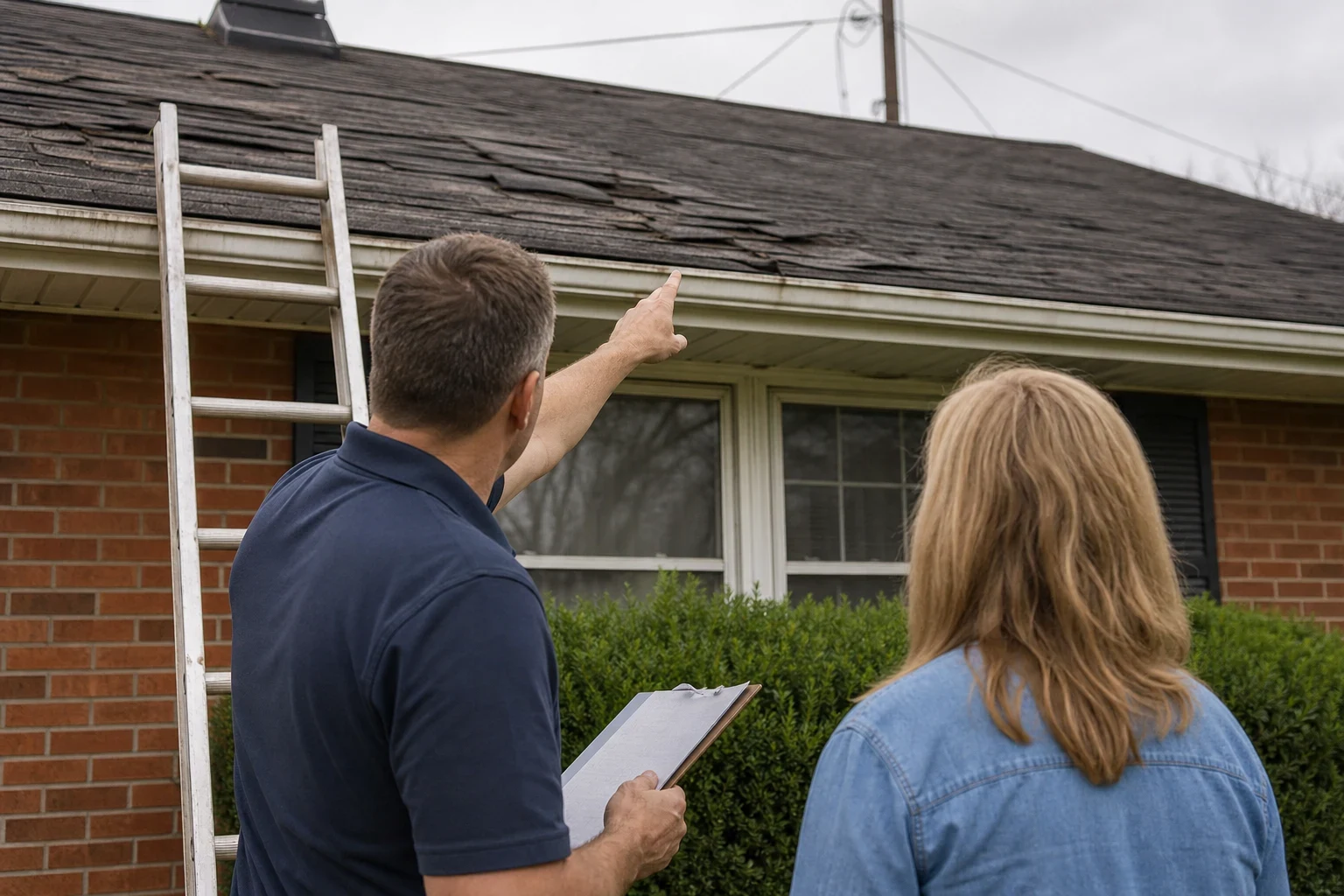
Signs It's Time for an Inspection
- Water marks indoors
- Yellow or brown marks overhead mean water is finding its way in. The gap on the roof is often several feet from where the mark shows up inside.
- Shingle grit in the gutters
- Small dark granules piling up in gutters or at the bottom of downspouts mean the shingles are wearing out.
- Ice dams last winter
- Thick ice along the eaves can push water under shingles. If you saw icicles and ice ridges, it's worth checking the edge of the roof and the attic airflow.
- A roof that's getting on in years
- If your roof is past the middle of its expected life, a yearly look helps you plan repairs or replacement on your own timeline instead of in the middle of a leak.
- Closing on a house
- Before you sign papers on a home, it pays to know the true condition of the roof. Buyers learn what they're taking on, and sellers can fix small things before a buyer's inspector points them out.
How Your Inspection Goes
- 1
Pick a day by phone
Tell us what you've noticed, like a stain, a drip or just the age of the roof. We settle on a day that suits you. You don't have to be there while we're on the roof, but we'd like to see the attic if you can let us in.
- 2
We check from the ground first
We walk around your home and look at the roof lines, gutters, siding and any sagging or uneven spots before we set a ladder.
- 3
We go up and look closely
When the pitch and the weather allow it, we get on the roof and work through it area by area: shingles, flashing, vents, valleys and the ridge. Photos get taken along the way.
- 4
We go over what we found
We sit down with you and the photos. You hear what's in good shape, what needs repair and how soon. If the roof only needs a small fix, we say so.
What Affects the Cost of Follow-Up Work
The inspection itself is free. If we find problems, the price of fixing them depends on a few things. We write each item out so you can see what you're paying for before you decide anything.
- What we find
- Resealing a pipe boot is a small job. Replacing rotted decking or a whole section of shingles is a bigger one.
- Roof pitch and height
- Steep or tall roofs need more safety gear and take longer to work on, which adds labor time.
- Damage under the surface
- Sometimes the real problem stays hidden until shingles come off. We tell you up front if that's a possibility so it's not a surprise.
- Repair or replacement
- If the roof is near the end of its life, patching may not be worth it. We'll tell you honestly whether roof repair or roof replacement makes more sense.
Roof Inspection Questions
- Is the roof inspection really free?
- Yes. We come out, check your roof and go over what we found at no charge. You're under no obligation to hire us for any work that follows.
- How long will the inspection take?
- Plan on roughly an hour for a typical roof. Bigger or steeper roofs run longer, and so does a trip into the attic. We also leave time to sit with you and go through the photos.
- Can you tell if my roof has storm damage?
- Yes. We look for hail bruising, creased or torn shingles and lifted flashing. If we find storm damage, we photograph it and explain what we see so you have a clear record before you talk to your insurance company. Our Storm Damage Repair page covers that work.
- What happens if you find a problem?
- We show you the photos and give you a written estimate for the fix. If we do the work, it's backed by our 10-year labor warranty. Once the job is done, we check back and explain how to keep it in good shape.
- How often does a roof need a checkup?
- For most homes, a yearly visit does the job, with an extra one after any big wind or hail storm. Spring is a good time to book it. By then winter's freezing and thawing has had its chance to loosen things.
Know What's Going On Up There
We inspect roofs in Crescent Springs, Villa Hills, Fort Mitchell, Erlanger and the towns around them. A short phone call puts your free inspection on the calendar.